June 15, 2026 • Diane Bennett • 8 min reading time • Prices verified June 28, 2026
Plant Protein Powders That Actually Cover Your Amino Acid Bases
If you’re new to protein powders, here’s the core idea: your muscles are built from proteins, and proteins are built from smaller building blocks called amino acids. There are 20 amino acids in total, and 9 of them are called essential — your body can’t manufacture them on its own, so they have to come from food or supplements. A protein source that contains all 9 essential amino acids at meaningful levels is called complete. Most animal-based proteins (whey, casein, eggs) are naturally complete. Many plant proteins, taken in isolation, are not — they’re low or missing in one or more of those 9 essentials, which limits how effectively your body can use them for muscle repair and growth. This guide is specifically about how to shop for plant protein powders that solve this problem — either through smart blending, fortification, or sheer amino density — so you get real results regardless of your dietary preference.
If you’ve already been around the block with plant protein and know your leucine thresholds from your PDCAAS scores, the nuance is in the formulation details. That’s where we’re spending most of our time below.
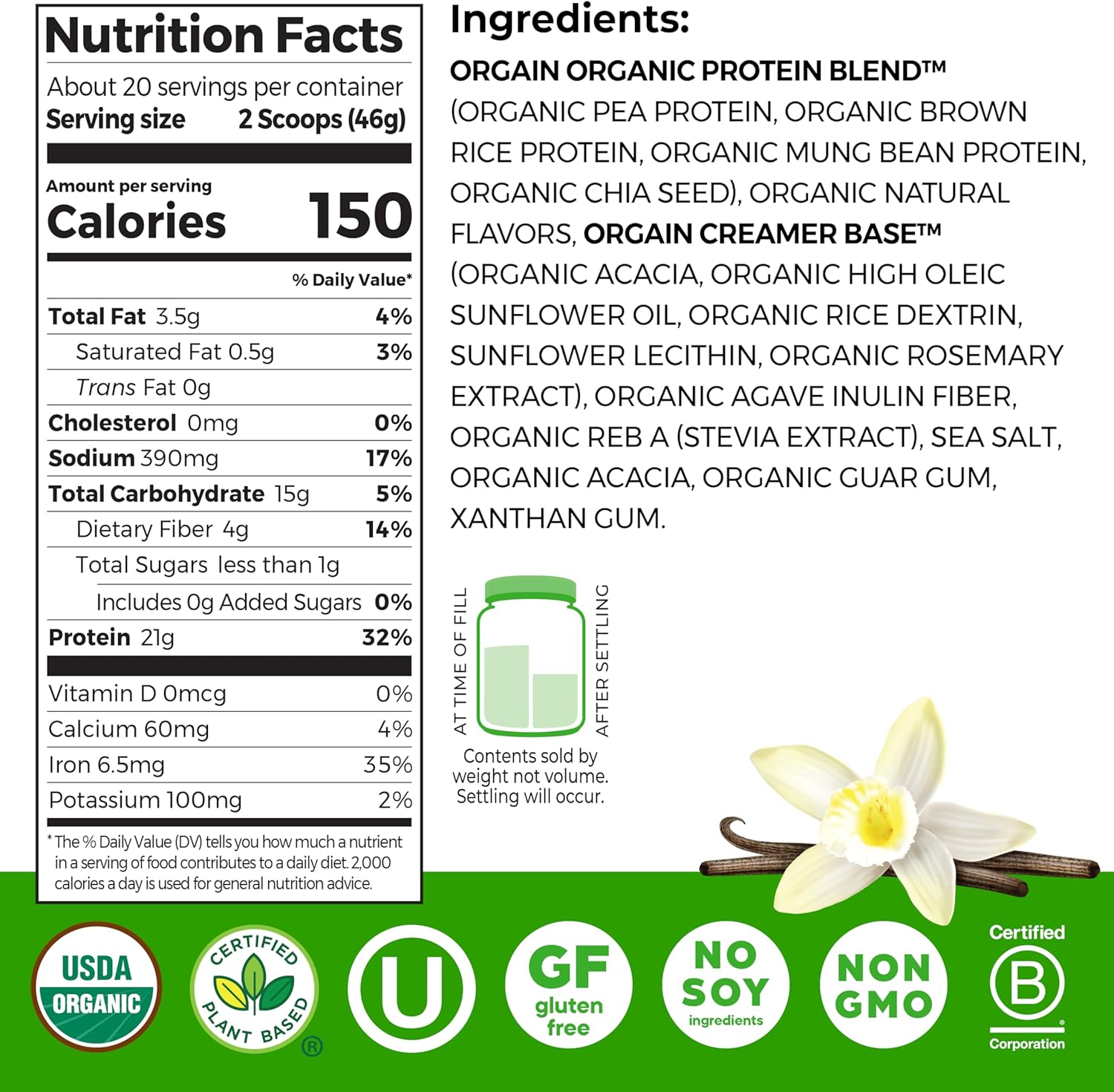
| EDITOR'S PICK[Ora Organic Plant-Based Protein…](https://www.amazon.com/dp/B071GSFY4F?tag=greenflower20-20) | Mid-tier[Orgain Organic Vegan Protein Po…](https://www.amazon.com/dp/B07PVKBGV3?tag=greenflower20-20) | Budget pickOrgain Organic Vegan Protein Po… | |
|---|---|---|---|
| Protein per serving | 23g | 21g | 21g |
| Flavor | Vanilla | Chocolate Fudge | Vanilla Bean |
| Servings | 20 | — | — |
| Prebiotic fiber | — | 6g | 6g |
| No added sugar | — | ✓ | ✓ |
| Third-party tested | ✓ | — | — |
| Price | $49.99 | $29.59 | $29.59 |
| See on Amazon → | See on Amazon → | See on Amazon → |
Why “Complete” Is the Only Metric That Actually Matters at Purchase
The 25g of protein listed on a plant powder’s label tells you almost nothing useful by itself. What matters is the amino acid composition of those 25g — specifically:
- Leucine content (the primary trigger for muscle protein synthesis, per ISSN position stand guidance)
- Lysine adequacy (the most common limiting amino acid in grain-based proteins)
- Methionine + cysteine (limiting in legume-based proteins including pea)
- Overall PDCAAS / DIAAS score — the digestibility-adjusted rating systems that tell you how bioavailable the protein actually is once it’s in your gut
The PDCAAS (Protein Digestibility Corrected Amino Acid Score) caps at 1.0, which is the standard used on most supplement labels. The newer DIAAS (Digestible Indispensable Amino Acid Score) is more accurate because it measures absorption at the small intestine rather than fecal output — and it doesn’t cap at 1.0, so a food can score above it. A 2018 paper by Gorissen et al. published in the journal Amino Acids measured the amino acid composition of commercially available plant protein isolates and found that most single-source plant proteins score significantly below whey on DIAAS — but that blended formulas can close much of that gap.
Here’s the honest tradeoff table before we go any further:
By the numbers — single-source plant proteins vs. whey on key amino acids (per 25g serving, approximate averages from published literature):
| Protein Source | Leucine (g) | Lysine (g) | DIAAS (approx.) |
|---|---|---|---|
| Whey isolate | 2.7 | 2.3 | 1.09 |
| Pea isolate | 1.8 | 1.7 | 0.82 |
| Brown rice protein | 1.9 | 0.8 | 0.59 |
| Soy isolate | 2.0 | 1.6 | 0.91 |
| Pea + rice blend (70/30) | 2.2 | 1.5 | ~0.95–1.0 |
Sources: van Vliet et al. (2015, Journal of Nutrition); Gorissen et al. (2018, Amino Acids); Examine.com leucine threshold analysis.
The math is clear: no single plant protein matches whey on DIAAS, but a well-formulated pea-and-rice blend gets within striking distance — and soy isolate competes more directly than most people give it credit for.
The Three Formulation Strategies Worth Paying For
When you’re evaluating a plant protein label, you’re looking for one of three approaches. Products that don’t fit any of these categories are probably selling you an impressive macro number without the amino architecture to back it up.
Strategy 1: Pea + Rice Blending (the workhorse)
Pea protein is rich in lysine but relatively low in methionine. Brown rice protein is the inverse — decent methionine, poor lysine. Blend them at roughly 70:30 or 60:40 pea-to-rice, and you cover each other’s limiting amino acids. This is the most common and most validated approach in the plant protein category. The ISSN’s protein position stand notes that blended plant proteins can approximate the anabolic response of animal proteins when total leucine and daily protein targets are met.
What to look for on the label: both pea protein isolate and rice protein concentrate (or isolate) listed as primary ingredients, not as trace additions buried after flavoring agents. If brown rice protein appears after “natural flavors,” you’re getting decoration, not function.
Brands using this architecture include Naked Nutrition’s Naked Pea + Brown Rice blend, Garden of Life Sport Organic Plant-Based Protein, and Vega Sport Premium — all of which publish their amino acid profiles on their product pages or via COA request.
Strategy 2: Soy Isolate (the underrated solo option)
Soy protein isolate is the only single-source plant protein with a DIAAS approaching 1.0 and a leucine content that meaningfully supports muscle protein synthesis at standard serving sizes. Health.Harvard.edu’s 2024 overview of plant-based protein notes that soy remains the most extensively studied plant protein for muscle outcomes, with multiple randomized trials showing comparable results to whey in resistance-trained individuals when dose and leucine are matched.
The tradeoff here is not performance — it’s consumer preference. Some athletes avoid soy due to concerns about phytoestrogens (plant compounds that weakly mimic estrogen). The research consensus, per Examine.com’s soy protein page, is that phytoestrogen content in protein isolates is substantially lower than in whole soy foods and that clinical evidence of hormonal disruption in healthy adult males consuming normal serving sizes is weak. But if that’s a concern for your client or your own protocol, the pea-rice blend is your clean alternative.
For third-party testing on soy-based products specifically: ConsumerLab’s 2025 protein powder review identified several soy protein products that passed heavy metal and label-accuracy testing, which matters given that plant proteins are more likely than whey to carry elevated cadmium load depending on soil origin.
Strategy 3: Fortified Amino Acid Enrichment
A third approach — more common in premium-tier products — is to take a single-source plant protein and add free-form amino acids (typically L-leucine and L-lysine) to hit clinical thresholds regardless of the base protein’s natural profile. Momentous Plant Protein uses this approach, blending pea and rice but also adding a leucine top-up to ensure the per-serving leucine dose meets or exceeds the ~2.5g threshold that ISSN guidelines associate with maximal muscle protein synthesis stimulation.
This is legitimate and effective, but it comes with a cost caveat: free-form amino acids are cheap to manufacture, and some brands use them to paper over a genuinely low-quality base protein. Check whether the full amino acid panel is disclosed. If the brand only shows you total protein and BCAAs (branched-chain amino acids — the three most marketed aminos, leucine, isoleucine, and valine) without a complete essential amino acid breakdown, that’s a flag.
Third-Party Testing: Non-Negotiable in the Plant Category
Plant proteins carry higher contamination risk than whey for two structural reasons. First, legumes and grains accumulate heavy metals — particularly cadmium and lead — from soil at higher rates than dairy. Second, the plant protein supply chain is more fragmented, with more ingredient brokers and fewer vertically integrated manufacturers.
ConsumerLab’s protein reviews have consistently flagged plant-based products for heavy metal exceedances more frequently than whey-based products. This isn’t a reason to avoid plant protein; it’s a reason to filter your shortlist by certification.
Minimum standard for this category: NSF Certified for Sport or Informed Sport certification. Both programs require batch testing for heavy metals, banned substances, and label-accuracy verification. NSF’s full program details are available at nsfsport.com; Informed Sport’s certified product registry is searchable at informedsport.com.
If a plant protein brand charges $60+ per tub and doesn’t carry one of these certifications, they’re asking you to take the quality claim on faith. For recreational gym-goers that may be an acceptable risk. For competitive natural athletes subject to drug testing — or coaches recommending products to clients — it isn’t.
The Decision Framework: If X, Then Y
You’ve got a product under consideration. Here’s how to run it through the filter quickly:
If you’re a recreational lifter prioritizing whole-food alignment and budget is secondary: Look for an NSF or Informed Sport certified pea-rice blend with a disclosed full amino acid panel. Garden of Life Sport and Vega Sport both fit this profile at a mid-to-premium price point. Expect to pay $1.50–$2.50 per serving.
If you’re a competitive natural athlete or you’re recommending for clients who compete: Certification is non-negotiable. Cross-reference the brand’s current certification status at nsfsport.com or informedsport.com before purchase — certifications lapse, and brands don’t always update packaging immediately. Momentous Plant and Thorne’s plant-based options are consistently cited in athletic-use contexts for this reason.
If soy avoidance isn’t a protocol requirement and cost-efficiency matters: A high-quality soy isolate from a certified supplier (BulkSupplements carries an NSF-verified soy isolate in bulk formats that dramatically cuts cost-per-gram) can be the smartest economic move on the board. The performance data supports it.
If you see a plant protein with a proprietary blend and no amino acid breakdown: Walk away. There’s no reason in 2026 for a legitimate plant protein brand to hide its amino acid profile. Transparency is table stakes at this tier.
If leucine per serving is below 2.0g on the label: Either the dose is too low for optimal muscle protein synthesis signaling (per ISSN thresholds) or the protein quality is insufficient. Either way, you’re leaving gains on the table unless you’re double-scooping — which changes the cost math significantly.
The plant protein category has matured enough that you don’t have to compromise. But the gap between a well-formulated product and a marketing-first product is still wide, and the label won’t close that gap for you. The amino acid panel, the third-party certification, and the formulation strategy will.