June 15, 2026 • Diane Bennett • 9 min reading time • Prices verified June 28, 2026
Grass-Fed Whey Isolate: When the Premium Is Earned and When It's Just Marketing
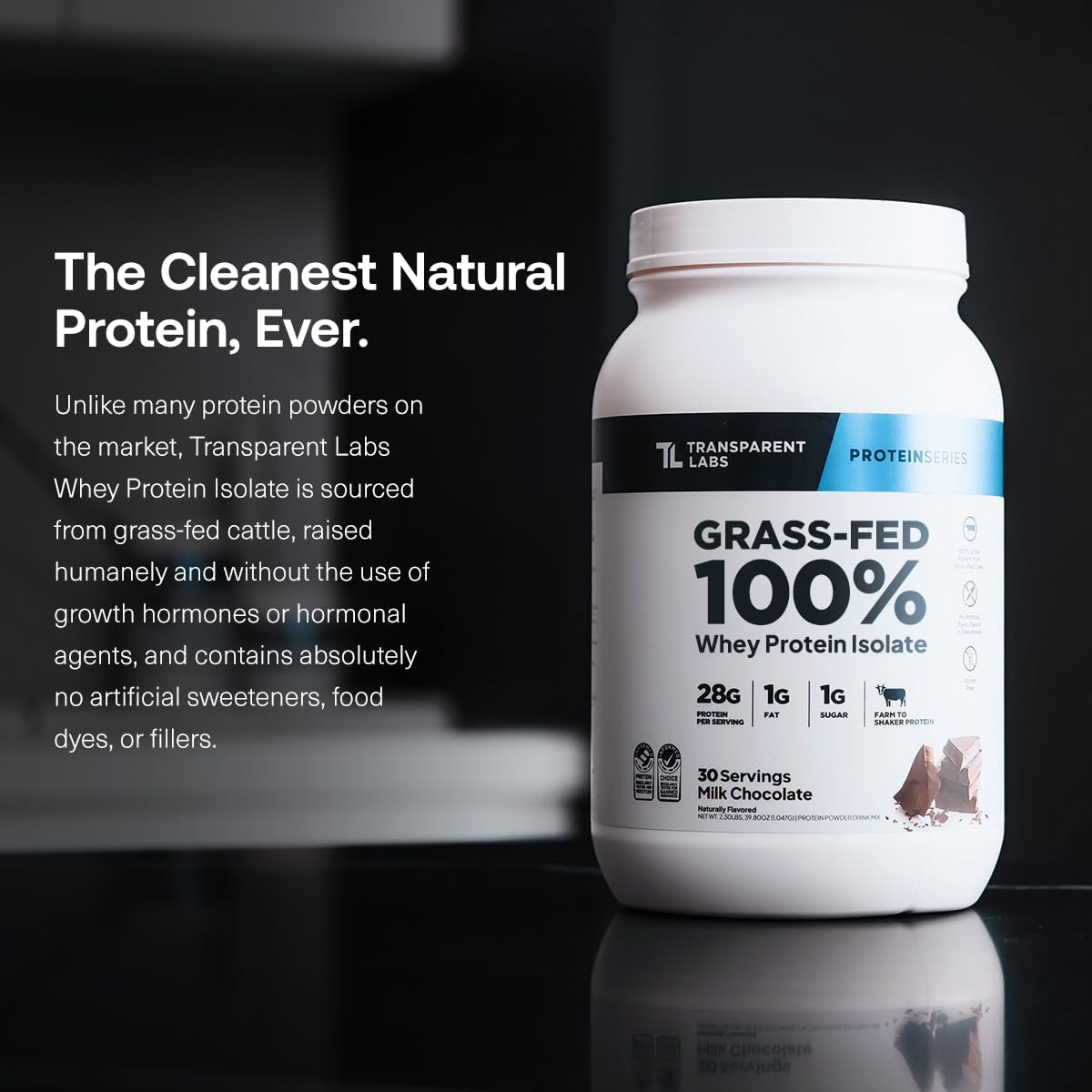
Whey protein is the filtered byproduct of cheesemaking — milk is curdled, the liquid whey is separated, and what remains gets dried into the powder you scoop into your shaker. “Whey isolate” specifically means that liquid has been processed further to strip out most of the fat and lactose, leaving you with a product that’s typically 90%+ protein by weight and digests faster than less-refined forms like whey concentrate. “Grass-fed” refers to where those cows lived and what they ate — pasture-raised animals whose diet is primarily grass rather than grain-based feed in a confined operation. That sourcing difference costs real money: grass-fed whey isolate routinely runs $1.80–$2.50 per serving versus $1.00–$1.40 for conventional whey isolate of comparable quality. This article is going to do one thing: help you decide whether you should pay that difference, based on what actually changes and what doesn’t.
If you’re already cross-referencing certificates of analysis and scanning ingredient panels for proprietary blend language, you already know this space well enough to have an opinion. The goal here is to tighten the decision frame — not sell you on a premium, and not dismiss one either.
What Actually Changes When Cows Eat Grass
The nutritional case for grass-fed dairy centers on fatty acid ratios, not protein. Research published in the Journal of Dairy Science — specifically the Benbrook et al. 2018 analysis of conventional vs. pasture-based milk — found that grass-fed milk has meaningfully higher concentrations of omega-3 fatty acids and a lower omega-6 to omega-3 ratio compared to conventional milk. Pasture-raised cows also tend to produce milk with higher conjugated linoleic acid (CLA) content, a fatty acid with some evidence for modest body-composition support.
Here’s where the honest conversation gets more complicated: whey isolate is a low-fat protein product by design. The isolation process removes most of the fat — which is exactly the fat where those omega-3s and CLA live. Examine.com’s whey protein research summary notes that the fatty acid advantages observed in whole grass-fed milk are substantially diluted through isolate processing. You’re buying a premium on a nutrient that largely gets filtered out.
What does survive the processing?
- The amino acid profile remains essentially identical between grass-fed and conventional whey isolate. The ISSN’s position stand on protein and exercise is clear that whey’s performance benefits — leucine content, rapid digestion kinetics, stimulation of muscle protein synthesis — are a function of the protein matrix itself, not the farming method.
- Some grass-fed isolates retain slightly higher phospholipid content depending on processing method, which may have minor absorption implications, but the research on this is not conclusive at the isolate level.
- Taste and mixability differences reported by consumers tend to be brand-specific and formulation-specific, not reliably attributable to grass-fed sourcing.
The honest summary: the biological case for grass-fed whey isolate as a performance supplement is thin. The case for it as a sourcing or values preference is more solid — animal welfare, environmental considerations, and reduced antibiotic/hormone exposure are real factors for buyers who weight them.
The Regulatory Gap You Need to Understand
This is where the marketing conversation gets critical. In the United States, “grass-fed” on a supplement label is not rigorously regulated at the federal level in the way that, say, “USDA Organic” is. The USDA Agricultural Marketing Service developed a Grass-Fed Marketing Claim Standard, but participation is voluntary and not universally adopted by supplement brands. A brand can print “grass-fed” on their tub without substantiating continuous pasture access, seasonal grazing requirements, or feed verification.
The practical result: there is a spectrum. On one end, you have brands using legitimately verified grass-fed whey sourced from audited New Zealand or Irish dairies — regions where year-round pasture grazing is standard practice due to climate. On the other end, you have brands printing “grass-fed” because their supplier uses a blend that includes some percentage of pasture-raised milk, with no third-party verification of that claim.
How to distinguish them:
- Certificate of Origin specificity. New Zealand and Ireland are credible pasture sourcing signals because the climate supports it structurally. Generic “USA-sourced grass-fed” claims without documentation are lower-confidence.
- Third-party certification. NSF Certified for Sport (nsfsport.com) and Informed Sport (informedsport.com) certify against banned substances and label accuracy — they don’t verify the grass-fed claim itself. What they do verify is that the label accurately reflects the contents, which increases the odds the sourcing claim is real if the brand is making it under certification.
- Certificate of Analysis availability. Brands that publish batch-level COAs and are willing to specify their whey source tend to be the ones making honest sourcing claims. ConsumerLab.com’s 2025 protein powder review flagged multiple products with protein content that didn’t match their labels — brands cutting corners on label accuracy are also more likely to be liberal with sourcing claims.
- “Grass-fed” vs. “grass-finished.” Grass-finished means the animal was on pasture for its entire life; grass-fed can technically mean the animal had access to pasture at some point. This distinction matters less for dairy cattle than for beef (dairy cows aren’t slaughtered at peak grain weight), but it’s worth noting if a brand is using loose language.
By the Numbers: The Premium, Broken Down
| Metric | Conventional Whey Isolate | Grass-Fed Whey Isolate |
|---|---|---|
| Typical cost per serving (30g) | $1.00 – $1.40 | $1.80 – $2.50 |
| Protein per serving | 25–27g | 25–27g |
| Fat per serving | 0.5 – 1.5g | 0.5 – 1.5g |
| Leucine content | ~2.5g per 25g protein | ~2.5g per 25g protein |
| Omega-3 advantage (isolate level) | Baseline | Marginal to negligible |
If you’re buying 60 servings a month — a reasonable benchmark for one scoop per training day — you’re looking at a $48–$66 monthly spend on conventional isolate versus $108–$150 on grass-fed. That’s a $60–$84 monthly delta for a protein advantage that, at the isolate level, is not measurable in muscle protein synthesis outcomes based on current research.
When the Premium Is Actually Earned
The premium makes sense in a narrower set of circumstances than marketing copy suggests — but those circumstances are real.
You’re managing lactose sensitivity or digestive issues. Grass-fed isolates from high-quality suppliers tend to be processed using cold microfiltration or cross-flow microfiltration rather than ion-exchange processing. Cold microfiltration better preserves bioactive peptides and immunoglobulins — minor players in the muscle-building picture but potentially relevant for gut health and immune function. If you’ve had GI issues with conventional isolates and the grass-fed version resolves them, that’s worth paying for. (Note: if lactose is the core issue, any whey isolate — grass-fed or not — removes most of it. The difference is more about residual processing artifacts.)
Sourcing transparency is part of your supplement philosophy. Competitive natural bodybuilders already scrutinizing COAs and NSF certifications have signaled that product integrity matters to them. A brand that invests in verified grass-fed sourcing, publishes batch COAs, and holds third-party certification is often — not always, but often — more rigorous across the board. The grass-fed premium is functioning as a proxy for overall supply-chain diligence. That’s a legitimate heuristic, as long as you’re not confusing the proxy for the outcome.
You’re a coach recommending products to clients. The “clean eating” or whole-foods framing resonates with certain client populations, and recommending a verified grass-fed isolate is defensible in that context. If it increases client adherence to hitting protein targets, the premium has indirect performance value.
Environmental or animal welfare considerations are meaningful to you. This is a values decision, not a performance decision. Both are legitimate; they just shouldn’t be confused with each other.
When It’s Marketing You’re Paying For
The label says “grass-fed” with no verification trail. No specific sourcing region, no COA, no third-party certification, no willingness from the brand to answer direct questions about their supplier. This is the category where you’re paying a $60+/month premium for a label choice.
You’re optimizing for raw muscle protein synthesis outcomes. The ISSN’s protein and exercise position stand and Examine.com’s analysis are consistent: the leucine content, PDCAAS/DIAAS scores, and digestion kinetics of whey are essentially equivalent between grass-fed and conventional isolate at comparable protein concentrations. If your decision frame is purely “most muscle per dollar,” conventional whey isolate from a certified brand wins.
The grass-fed product has a weaker certification profile than a conventional competitor. A grass-fed isolate with no NSF or Informed Sport certification from a brand that doesn’t publish COAs is a worse purchase — on the dimensions that actually matter for athletic use — than a conventional whey isolate with full NSF Certified for Sport status. Don’t let the sourcing story distract from the certification fundamentals.
You’re stacking multiple premium products. If your monthly supplement budget is already allocated across a high-dose creatine monohydrate protocol, EAAs, and a pre-workout, paying the grass-fed premium on whey may be the lowest-ROI spend on your stack. Redirect that $60–$84 toward a higher-dose creatine protocol or a better-certified pre-workout before optimizing the farming method on your protein powder.
The Decision Rule
If you need a clean heuristic:
-
If third-party certification and label transparency are your floor requirements — start there, in both conventional and grass-fed options. NSF Certified for Sport or Informed Sport status is the non-negotiable. Brands like Momentous and Thorne clear this bar; evaluate grass-fed within that certified subset.
-
If budget is the binding constraint — conventional whey isolate from a certified brand is the better call. The performance delta between grass-fed and conventional isolate is not measurable in outcomes-based research. Put the savings into hitting your total daily protein target consistently, which is measurable.
-
If sourcing transparency and supply-chain integrity are part of your selection criteria — and you’re a buyer who routinely cross-references COAs — the grass-fed premium from a brand with verified sourcing (specific regional provenance, third-party certification, published batch COAs) is defensible. Bare Performance Nutrition, Transparent Labs, and a handful of other brands in the $60–$90 per tub range make this case with their sourcing documentation. The premium is earned there.
-
If the label says “grass-fed” and nothing else backs it up — treat it as a marketing choice, not a nutrition choice, and price it accordingly.
The supplement industry will keep putting “grass-fed” on labels as long as buyers keep paying for it without asking the follow-up questions. The questions are easy: Where’s the whey sourced? What verification exists? Is there a current COA? The brands worth your premium budget answer them quickly and specifically. The ones that don’t have answered your question already.