May 11, 2026 • Diane Bennett • 9 min reading time • Prices verified June 28, 2026
5g Per Day, Every Day: The No-Nonsense Creatine Monohydrate Buying Guide
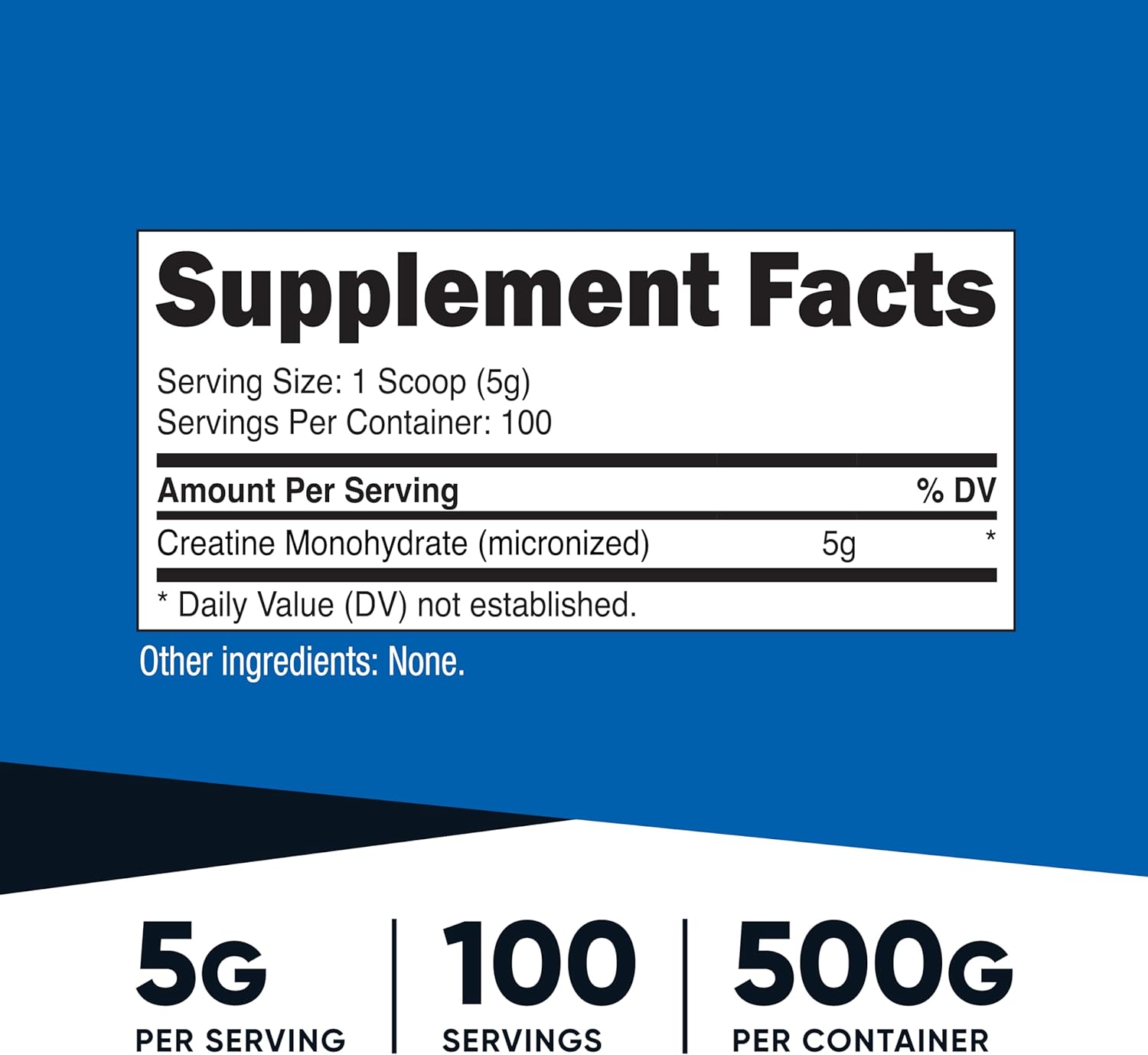
Creatine monohydrate is the most studied performance supplement in existence — and arguably the safest value in the entire supplement aisle. If you’re new to the concept: creatine is a compound your body already makes from amino acids, and it’s stored in your muscles as phosphocreatine. During short, high-intensity efforts — a heavy squat set, a sprint, a max-effort deadlift — phosphocreatine donates a phosphate group to regenerate ATP, which is the cellular currency your muscles burn for energy. Supplementing with creatine tops up those stores beyond what diet alone typically provides, giving you more fuel for those peak-effort moments. Over weeks of consistent use, the research consistently shows improvements in strength, lean mass, and training volume. This guide cuts through the noise on dosing, sourcing, and product selection — so you know exactly what to buy, what to skip, and why the form-factor decision matters more than most brands want you to think.
If you’ve been around the lifting world for more than a few months, you’ve heard the basic pitch. What this guide focuses on is the part that trips up even experienced buyers: the quality signal problem. Raw creatine monohydrate powder is a commodity. That means the difference between a $12 tub and a $45 tub is rarely the creatine itself — it’s purity verification, third-party testing, and whether a brand is willing to show you the receipts.
The 5g/Day Protocol: What the Evidence Actually Supports
Let’s anchor on dosing first, because this is where a lot of confusion lives.
The International Society of Sports Nutrition’s position stand on creatine (the ISSN document is freely accessible at issn.net) recommends a maintenance dose of 3–5 grams per day for most adults. The old loading protocol — 20g/day split across four doses for 5–7 days — does saturate your muscle stores faster (roughly a week versus 3–4 weeks), but the endpoint is the same: fully saturated phosphocreatine stores. As Examine.com’s creatine research overview notes, the loading phase isn’t wrong, but it’s also not necessary for the vast majority of lifters. It does increase the likelihood of short-term GI discomfort. For most purposes, 5g/day from day one is the practical standard.
By the numbers:
- Maintenance dose: 3–5g/day (ISSN position stand)
- Loading dose (optional): 20g/day × 5–7 days, then 3–5g/day
- Time to saturation without loading: ~3–4 weeks
- Effective dosing window: anytime — timing relative to workouts shows no meaningful performance difference per Examine.com
One thing worth flagging explicitly: higher-body-weight athletes (220+ lbs / 100+ kg) may benefit from the upper end of that range, closer to 5g daily rather than 3g. Some ISSN-cited protocols for larger athletes use 0.03g per kilogram of bodyweight as a rough guide. At 100kg, that’s exactly 3g; at 120kg bodyweight, you’re at 3.6g — still comfortably in the 5g-per-day standard serving window.
The bottom line for your buying math: a 500g tub at 5g/day gives you exactly 100 servings — roughly 3.3 months of supply. A 1kg tub at the same dose is a 6.6-month supply. This affects your cost-per-gram calculation meaningfully when you’re comparing across brands.
What “Quality” Actually Means in a Creatine Monohydrate Product
This is the section most buying guides skip. Creatine monohydrate is structurally simple — it’s one compound. But purity and contamination risk vary significantly across suppliers, and the brands that cut corners on raw material sourcing don’t advertise that fact.
The Creapure® signal. The most reliable raw-material quality indicator in the market is Creapure® — a trademarked creatine monohydrate manufactured by AlzChem in Germany. It’s produced via a synthesis route that minimizes common contaminants: dicyandiamide (DCD) and dihydrotriazine (DHT), which are byproducts of some manufacturing processes. ConsumerLab.com’s creatine supplements review has repeatedly identified DCD contamination in creatine products from manufacturers not using pharmaceutical-grade synthesis. Creapure® isn’t a mandatory requirement — other suppliers produce clean creatine — but it’s the shorthand that eliminates guesswork. If a brand uses Creapure® and publishes a certificate of analysis (COA) confirming it, you’re in good shape.
Third-party testing certifications. For tested athletes — competitive natural bodybuilders, powerlifters pursuing USADA/WADA-adjacent tested federations, or anyone subject to workplace or military drug screening — the certification tier matters more than the brand name. Two credentials dominate the legitimate market:
- NSF Certified for Sport (nsfsport.com): The gold standard for U.S. drug-tested athletes. Every lot is batch-tested against the WADA prohibited list, and certifications are verifiable in their public database.
- Informed Sport (informedsport.com): The U.K.-originating equivalent, widely accepted across international tested federations. Also batch-tested, searchable database.
For recreational lifters not subject to testing, these certifications still provide meaningful contamination assurance. The cost premium is modest — typically $0.03–$0.08 per serving more than uncertified equivalents — and represents real lab work, not marketing spend.
The proprietary blend red flag doesn’t apply much to standalone creatine (there’s nothing to hide in a single-ingredient product), but it resurfaces in pre-workout blends that include creatine. If you’re considering a pre-workout partially for its creatine content, verify the creatine dose is disclosed. A product that lists “creatine monohydrate” in a proprietary blend with no stated dose is almost certainly under-dosing the ingredient to keep costs down while keeping it on the label. The effective dose is 3–5g; anything less is a label claim, not a functional contribution.
The Product Tier Decision: Where to Actually Spend Your Money
Here’s the decision tree most buyers actually need. Creatine monohydrate is one of the few supplements where buying up doesn’t always mean buying better — but buying down introduces real risk.
Tier 1: Bulk raw powder ($0.03–$0.06/g) Brands like BulkSupplements offer unflavored creatine monohydrate in quantities from 500g to 5kg with published COAs and Creapure® sourcing options. At 1kg for roughly $20–$25 as of mid-2026, this is the cost-per-gram floor for the market. The tradeoff: no third-party sport certification, no individual serving packaging, no mixability enhancements. For recreational lifters who want to verify COA documentation and aren’t subject to drug testing, this is a rational choice. Owners across aggregated reviews consistently report excellent solubility and no off-taste. The main downside is convenience — you’re scooping from a 5kg bag and trusting the brand’s QC documentation rather than an independent audit.
Tier 2: NSF/Informed Sport-certified standalone creatine ($0.10–$0.18/g) This is where brands like Thorne (which holds NSF Certified for Sport status across multiple products), Momentous, and Bare Performance Nutrition operate. At 5g/day, even a $35–$45 tub lasts 2–3 months, so the monthly cost delta versus Tier 1 is $5–$10 — roughly the price of one protein bar. For any competitive athlete in a tested federation, this isn’t a discretionary upgrade; it’s the minimum viable standard. For serious recreational lifters, it’s a low-cost insurance policy against contamination risk that ConsumerLab testing has documented in lower-tier products.
Tier 3: Premium creatine within a full stack ($0.15–$0.25/g effective) Products like Transparent Labs BULK Pre-Workout include disclosed creatine monohydrate doses (typically 5g per serving) alongside other ergogenic ingredients. If you’re buying BULK Pre-Workout for the pre-workout formula anyway, you’re effectively getting your creatine dose bundled. The cost-per-gram of creatine in a bundled stack is higher than standalone, but the relevant comparison is total stack cost versus buying components separately. Run the math: if a certified pre-workout with 5g creatine costs $65/month and standalone creatine adds $8–$12/month on top, you’re paying $8–$12 for a second container and scoop. That’s a real cost with no performance upside.
If you’re stacking creatine into a pre-workout that already contains a full 5g dose, buying separate creatine is redundant. This sounds obvious, but it’s a common double-spend in intermediate-level stacks.
COA Literacy: Reading the Receipt Before You Buy
A certificate of analysis (COA) is a lab document confirming what’s actually in a product lot — the “receipt” that connects a specific manufacturing batch to test results. For creatine, the relevant COA checkpoints are:
- Creatine content by assay — should be ≥99.9% for pharmaceutical-grade powder
- DCD (dicyandiamide) content — should be undetectable or below 20ppm; elevated DCD is the primary contamination flag in lower-quality creatine synthesis
- Heavy metals panel — lead, arsenic, cadmium, mercury; relevant for any supplement taken daily indefinitely
- Testing laboratory — should be an accredited third-party lab, not an in-house facility
Brands with NSF or Informed Sport certification will have batch-level testing documentation you can cross-reference via their public databases. For non-certified brands (including some Tier 1 bulk suppliers), you’re relying on the brand’s published COA — which is better than nothing, but is one level less audited. BulkSupplements, to their credit, publishes COAs per lot on their product pages; this is industry-leading transparency for a commodity bulk supplier.
Per Examine.com’s research overview, the contamination risk in creatine is real enough to matter, but the prevalence is concentrated in the lowest price tier and in creatine forms that aren’t monohydrate (creatine ethyl ester and creatine hydrochloride have weaker manufacturing QC standards and substantially weaker efficacy evidence).
The Clear Decision Rule
If the decision matrix above feels abstract, here’s the practical resolution:
- Recreational lifter, no drug testing, budget-conscious → Tier 1 bulk creatine monohydrate with a published COA from a verifiable accredited lab. 1kg for $20–$25 is a legitimate, evidence-based choice.
- Competitive athlete in any tested federation → NSF Certified for Sport or Informed Sport certification is non-negotiable. Thorne, Momentous, and Bare Performance Nutrition all have verifiable entries in the certification databases. Spend the extra $5–$10/month.
- Currently taking a pre-workout with a disclosed 5g creatine dose → Don’t double up on standalone creatine. Verify the dose is stated on the label (not hidden in a proprietary blend), then skip the redundant purchase.
- Budget is flexible and peace of mind matters → The certified Tier 2 options are cheap enough per month that the upgrade math is almost always favorable. At $8–$12/month for tested, verified creatine, the risk-adjusted cost of the Tier 1 path rarely saves enough to justify it once you’ve accounted for contamination probability.
The supplement industry moves fast on marketing claims and slow on transparency. Creatine monohydrate is the rare corner of the market where the science is settled, the cost is low, and the only remaining variable is whether you’re buying from a brand willing to show you what’s actually in the bag. Ask for the COA. Check the certification database. Run the cost-per-gram math on your actual 5g/day protocol. The right answer almost always becomes obvious.