May 13, 2026 • Diane Bennett • 9 min reading time • Prices verified June 28, 2026
Creatine Capsules vs. Powder: The Honest Cost and Convenience Breakdown
Creatine is one of the most thoroughly studied performance supplements in existence — a compound your muscle cells already produce naturally, which you can also get from red meat, but rarely in amounts large enough to saturate your muscles’ storage capacity. Supplementing it tops up what’s called your phosphocreatine pool, a fast-access energy reserve your body draws on during short, explosive efforts like a heavy deadlift or a sprint. The practical result, documented across hundreds of trials: modestly but reliably better strength output, faster recovery between sets, and over time, greater lean mass accrual. If you’re reading this site, you probably already know creatine works. What you might be less certain about is whether to buy it as a loose powder you scoop into a drink or as pre-measured capsules you swallow whole — a choice that looks trivial but quietly affects your cost per dose, your day-to-day compliance, and your flexibility when you’re traveling or stacking other products. This article lays out the real tradeoffs.
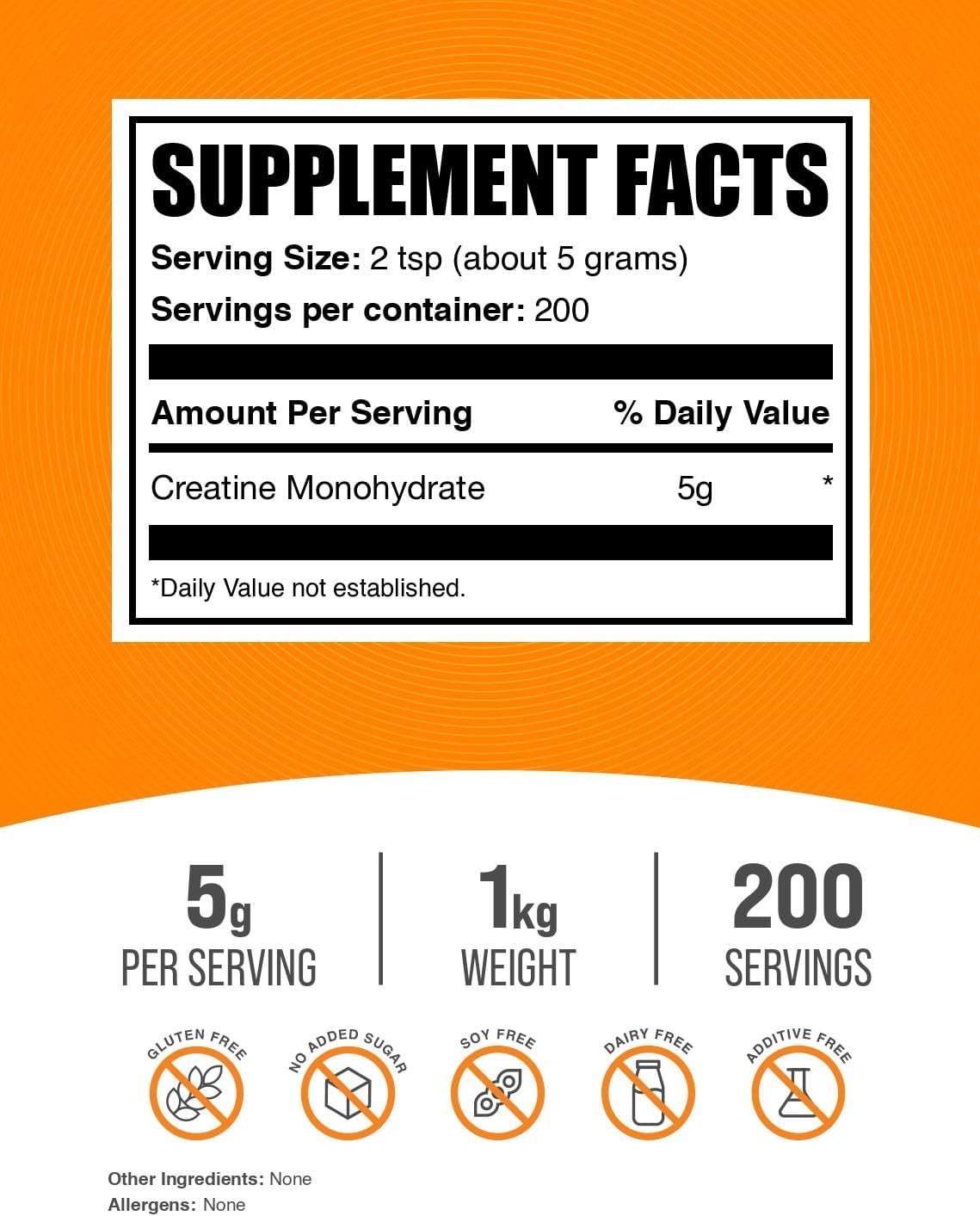
| EDITOR'S PICK[Optimum Nutrition Creatine](https://www.amazon.com/dp/B00DLWONF2?tag=greenflower20-20) | Mid-tier[BulkSupplements.com Creatine Mo…](https://www.amazon.com/dp/B00E9M4XEE?tag=greenflower20-20) | Budget pick[Nutricost Creatine Monohydrate…](https://www.amazon.com/dp/B00GL2HMES?tag=greenflower20-20) | |
|---|---|---|---|
| Form | Capsules | Powder | Powder |
| Serving Size | 2.5 g | 5 g | 5 g |
| Servings | 100 | — | 100 |
| Weight | — | 1 kg (2.2 lbs) | 500 g (17.9 oz) |
| Banned Sub. Tested | ✓ | — | — |
| Price | $30.40 | $29.97 | $21.50 |
| See on Amazon → | See on Amazon → | See on Amazon → |
The Core Difference: What You’re Actually Comparing
Both capsules and powder deliver the same active molecule — creatine monohydrate, the form with the deepest evidence base. The International Society of Sports Nutrition Position Stand on Creatine Supplementation and Exercise (Journal of the International Society of Sports Nutrition, 2017) identifies creatine monohydrate as the reference form for both safety and efficacy research. The delivery vehicle is the only variable. Understanding why that variable matters requires knowing the standard clinical dose.
The ISSN position stand, as well as the Examine.com Creatine Research Summary, both put the established maintenance dose at 3–5 grams per day for most adults, with a loading phase — 20 g/day split across four doses for 5–7 days — sometimes used to saturate stores faster. That number, 3 to 5 grams, is the lens through which every cost and convenience comparison has to be evaluated.
Powder typically delivers that dose in a single rounded teaspoon (roughly 5 g per scoop in most products). Capsules typically contain 750 mg to 1,000 mg each, meaning a 5 g dose requires 5–7 capsules at once. That gap in pill burden is the source of almost every real-world complaint about the capsule format.
The Cost Math: Where Powder Wins Decisively
This is where the comparison is least ambiguous. The numbers below reflect representative retail pricing as of mid-2026 across formats and quality tiers.
Budget Tier: Bulk Monohydrate Powder
| Format | Example size | Approximate retail | Cost per 5 g dose |
|---|---|---|---|
| Monohydrate powder | 500 g (100 doses) | $18–$25 | $0.18–$0.25 |
| Monohydrate powder | 1 kg (200 doses) | $25–$35 | $0.13–$0.18 |
At this tier, brands like BulkSupplements source and sell creatine monohydrate powder with Certificates of Analysis (COAs) available on request — the kind of documentation serious buyers use to verify purity and heavy-metal absence. The 1 kg price point is among the lowest cost-per-dose options with traceable quality documentation available to consumers without a certification program premium.
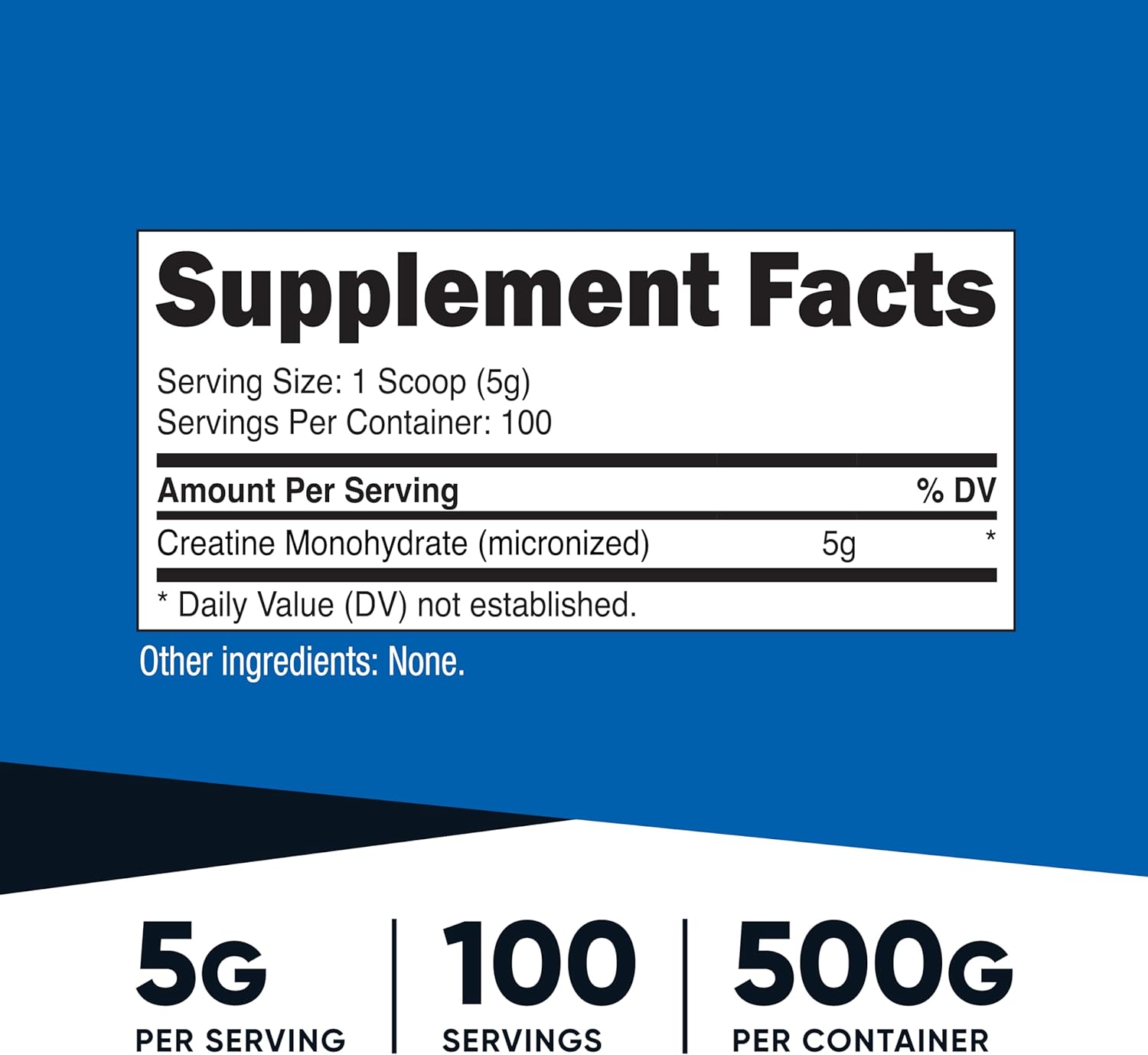
Nutricost
$21.50
In stock on Amazon
Check price on AmazonMid-Tier: Certified Powder and Standard Capsules
| Format | Example size | Approximate retail | Cost per 5 g dose |
|---|---|---|---|
| Capsules (750 mg) | 300 caps (45 doses at 5 g) | $20–$30 | $0.44–$0.67 |
| Capsules (1,000 mg) | 300 caps (60 doses at 5 g) | $22–$32 | $0.37–$0.53 |
| Certified monohydrate powder | 500 g | $28–$40 | $0.28–$0.40 |
Capsules in this tier run roughly 2–3× the per-dose cost of bulk powder for the same molecule. Over a year of daily maintenance dosing, that difference can reach $60–$150 depending on brand and capsule size. The ConsumerLab.com Creatine Supplements Review (2025) found that most reputable monohydrate products from established brands passed label-claim testing — reassuring for the category broadly — but capsules showed slightly more variance in delivered dose per serving due to fillers and flow agents consuming capsule volume.
BulkSupplements.com
$29.97
In stock on Amazon
Check price on AmazonPremium Tier: Third-Party Certified Options for Tested Athletes
| Format | Brand examples | Certification | Approximate cost per 5 g dose |
|---|---|---|---|
| Powder | Thorne Creatine, Momentous Creatine | NSF Certified for Sport | $0.40–$0.65 |
| Capsules | Select Informed Sport-certified SKUs | Informed Sport | $0.55–$0.80 |
NSF International’s Certified for Sport program, as described in the NSF Certified for Sport Program Overview published by NSF International, requires batch-level testing for banned substances and label accuracy — not just a one-time audit. Informed Sport, per the Informed Sport Certification and Testing Standards Overview, runs an analogous program with quarterly list updates. Both Thorne and Momentous occupy this premium powder tier. Certified capsule options from smaller brands do exist; verify current certification status directly at nsfsport.com or informedsport.com before purchasing, as certification rosters update regularly.
The stacking of format premium on top of certification premium is the primary reason most practitioners who optimize for value migrate to certified powder rather than certified capsules.
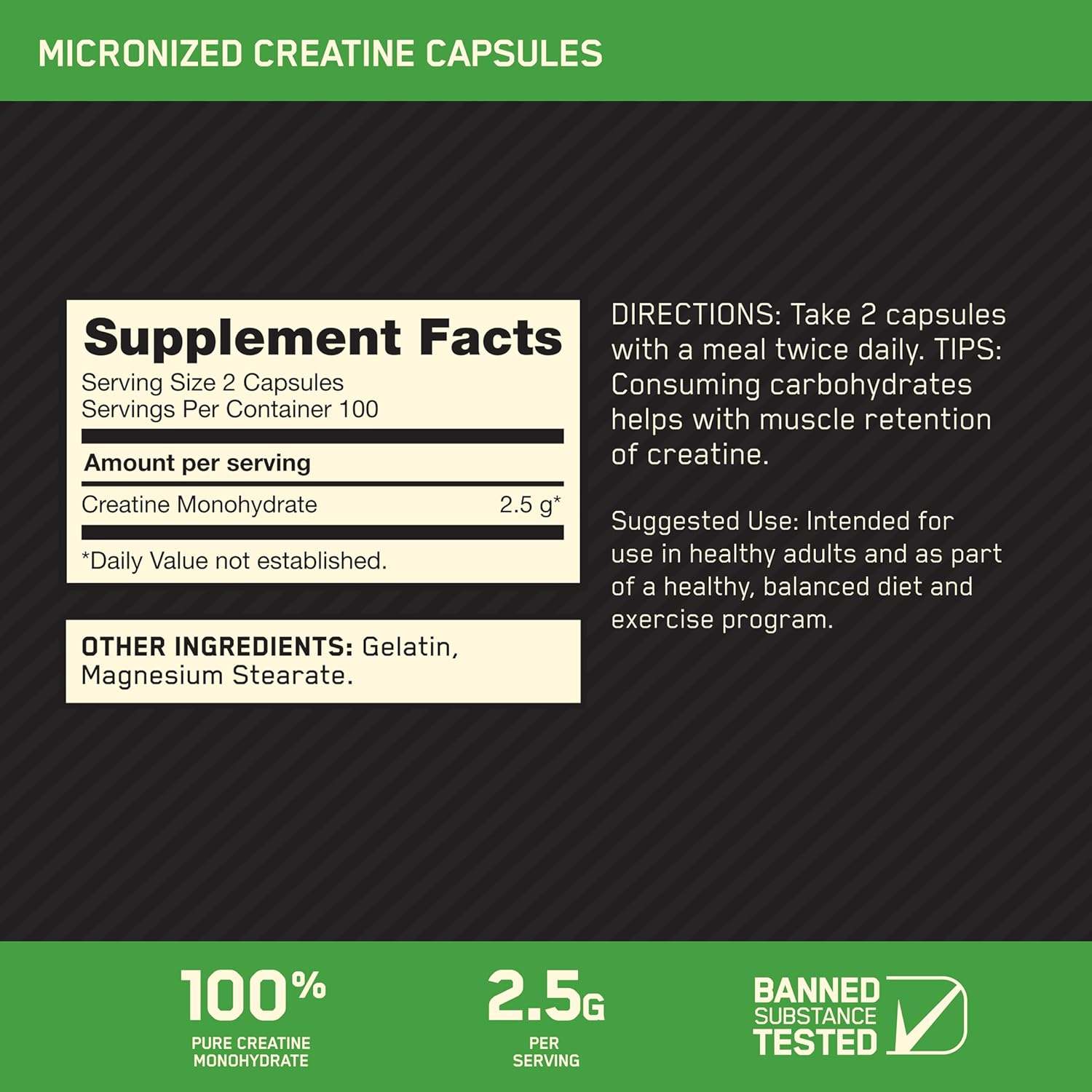
Optimum
$30.40
In stock on Amazon
Check price on AmazonThe Convenience Case: When Capsules Earn Their Premium
If cost-per-dose were the only variable, this article would be very short. Capsules persist in the market because they solve real problems.
Travel and portability. A 30-day supply of creatine powder in a 500 g tub is bulky, can clump in humidity, and creates friction if you’re traveling with loose white powder in your carry-on. A travel-size pill organizer or a small bottle of 150 capsules fits in a toiletry bag with zero additional planning. For athletes who travel frequently — or coaches who move products between multiple client facilities — this is a legitimate quality-of-life argument.
Taste neutrality and stacking flexibility. Creatine monohydrate powder is nearly flavorless, but it can produce a slightly gritty texture and doesn’t dissolve cleanly in all liquids. For athletes already managing a complex stack — a pre-workout, an intra-workout EAA blend, a post-workout protein shake — adding a scoop of creatine to each vessel creates a sequencing decision. Capsules sidestep this entirely: swallow them with water at any point in the day, independent of any other product.
Compliance for non-gym contexts. Research on creatine’s emerging benefits for cognitive function and neuroprotection, summarized in the Examine.com Creatine Research Summary, has some practitioners dosing on rest days and recommending creatine to non-athletes. A capsule format is meaningfully easier to integrate into a standard supplement routine for someone who isn’t blending a workout shake.
Dose precision without measuring equipment. At 750 mg or 1,000 mg per capsule with clear label counts, capsules offer precision without a scale. This matters during a loading phase when you’re splitting 20 g/day into four separate doses — counted capsules remove the guesswork for users who care about exact amounts.
Quality Signals and What to Watch For
Label Accuracy and Reformulation Risk
One issue the Muscleformulas editorial desk tracks closely is quiet reformulations — when brands reduce active ingredient doses without fanfare. In the creatine capsule space, the relevant watch item is capsule size drift: some brands have moved from 1,000 mg to 750 mg capsules in newer production runs without proportionally reducing price, effectively delivering 25% less per capsule at the same cost. Always check the Supplement Facts panel, not just the serving count on the front label.
The ConsumerLab.com Creatine Supplements Review (2025) corroborates that the creatine category is generally cleaner than many supplement categories for label accuracy, but verifying the Supplement Facts “creatine monohydrate” gram quantity — rather than total capsule content including excipients — remains the key check for capsule buyers.
Patented Variants: A Necessary Digression
There are no meaningful patented forms of creatine that outperform monohydrate for practical strength and hypertrophy goals at equivalent doses. Creatine HCl, buffered creatine (Kre-Alkalyn), and similar variants are marketed as requiring smaller doses or producing less GI distress, but the Examine.com Creatine Research Summary finds the evidence for superiority over monohydrate unconvincing — and they are priced significantly higher. If you encounter a capsule product leading with a non-monohydrate form, that is a signal to scrutinize the cost math and efficacy claims before purchasing.
Certification as a Quality Floor
For tested athletes, the NSF Certified for Sport or Informed Sport credential functions as a quality floor, not just a marketing badge. Per NSF International’s Certified for Sport Program Overview, certified products undergo batch testing rather than relying on ingredient certificates alone. If you are subject to anti-doping rules, format preference is secondary — the certification is the non-negotiable variable.
Matching Format to Use Case: The Decision Framework
H3: Budget-Conscious Home User
You’re an intermediate lifter who is home-based, already blending post-workout shakes, and not subject to drug testing. The cost math is unambiguous: bulk monohydrate powder with an available COA (BulkSupplements is the category benchmark here) delivers the same molecule at a fraction of the per-dose cost of capsules. The per-dose savings over 12 months are material — potentially enough to fund another supplement category entirely.
Nutricost
$21.50
In stock on Amazon
Check price on AmazonH3: Frequent Traveler or Non-Athlete User
You travel more than two weeks per month, dislike adding things to drinks, or you’re a coach recommending creatine to clients who aren’t already in a shake-based routine. Capsule format compliance advantages may outweigh the 2–3× cost premium — especially at the 30-serving trial size where the absolute dollar difference is small. The powder-at-home, capsules-for-travel hybrid is underused: buy bulk powder for your home base and keep a small capsule bottle in your travel bag. The incremental cost is modest and you don’t interrupt your protocol.
BulkSupplements.com
$29.97
In stock on Amazon
Check price on AmazonH3: Tested Competitive Athlete
You compete in a natural federation or sport governed by WADA, USADA, or an equivalent body. Certification status is the primary purchase criterion. Momentous Creatine (powder, NSF Certified for Sport) and Thorne Creatine (powder, NSF Certified for Sport) are the current reference-tier options. Informed Sport-certified capsule SKUs exist from select brands — verify current certification status directly at informedsport.com before purchasing. You pay the premium willingly because the downside risk of a contaminated product is categorically different from that facing recreational users.
Optimum
$30.40
In stock on Amazon
Check price on AmazonThe Decision Rule
If the format question is still pending, here is the honest framework:
-
Optimizing cost, home-based, in a shake routine → powder. BulkSupplements for documented budget value; Thorne or Momentous powder if you need the certification. The per-dose economics make capsules hard to justify for this use case.
-
Frequent travel, no shake routine, or recommending to non-athlete clients → capsules may be worth the 2–3× premium. Compliance is the mechanism through which creatine actually works, and format friction is a real compliance variable.
-
Tested athlete → certifications trump format. Find the NSF Certified for Sport or Informed Sport option you can afford and commit to it in whichever form is currently certified.
-
Cost-conscious but want capsule convenience → run powder at home and keep a travel bottle of capsules. The hybrid approach is the one most experienced practitioners eventually land on anyway.
The molecule doesn’t care how it arrives. Your protocol does.